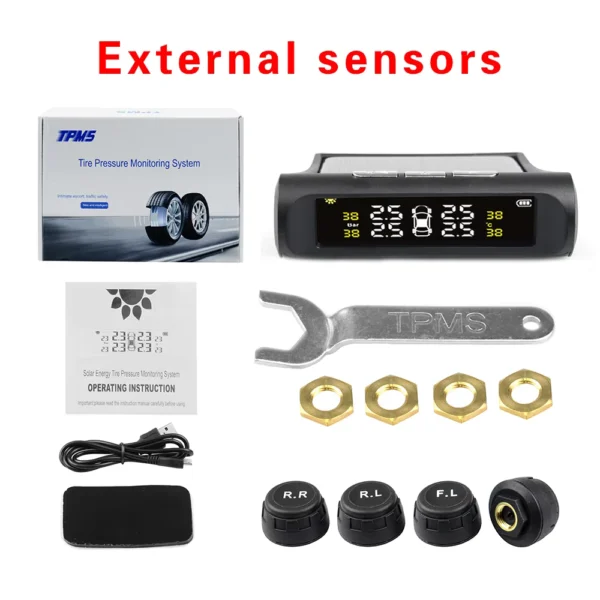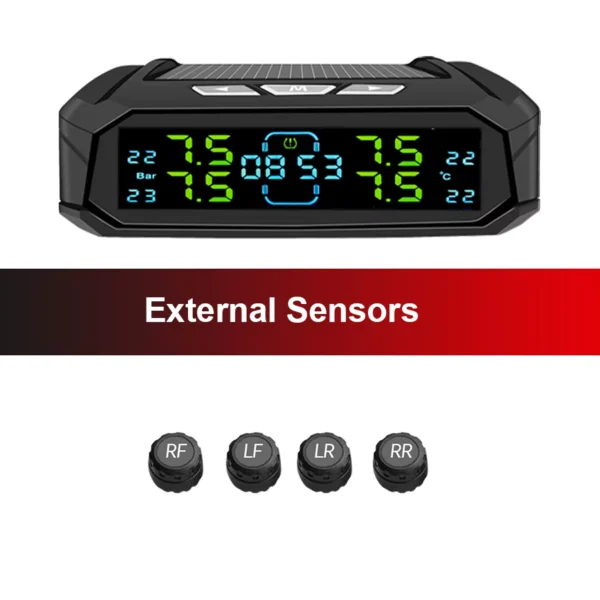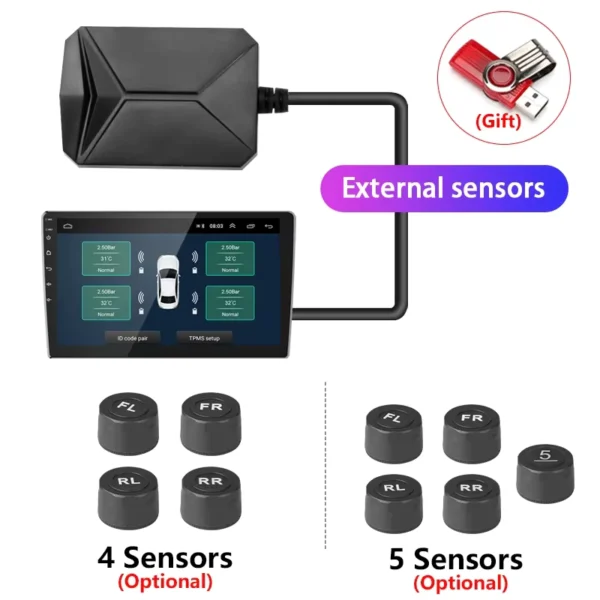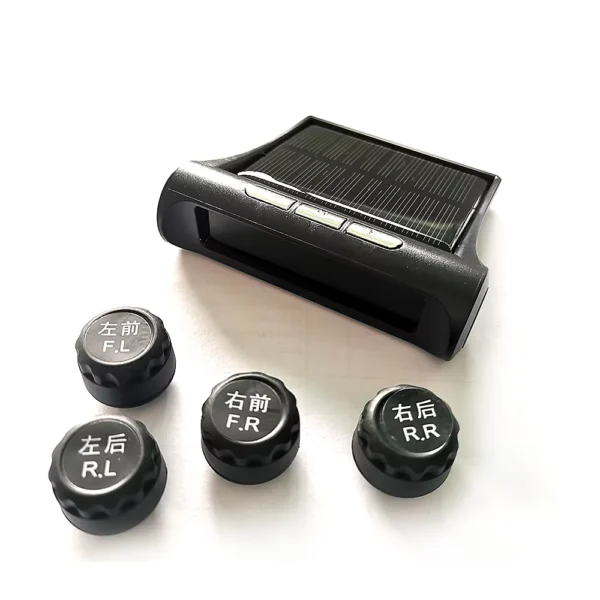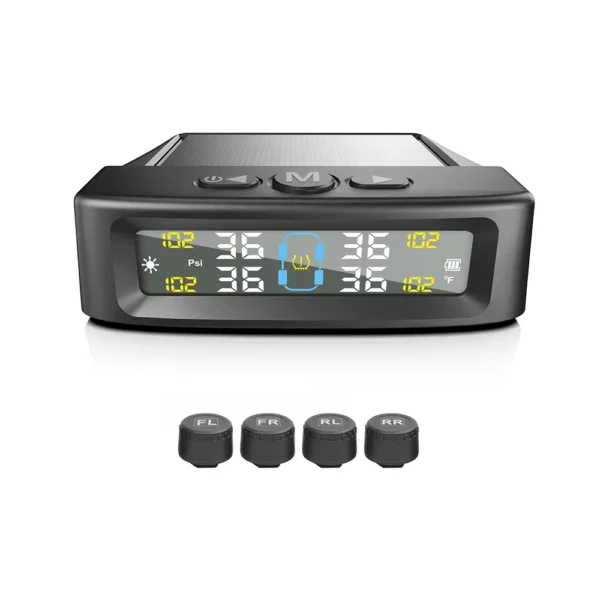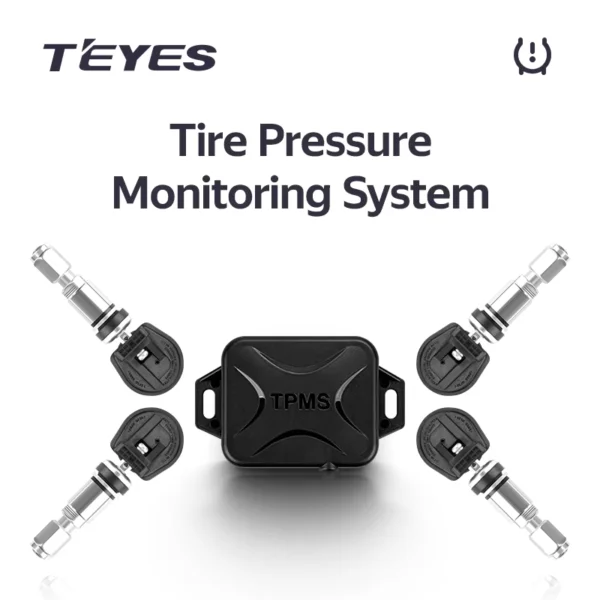

what I ordered
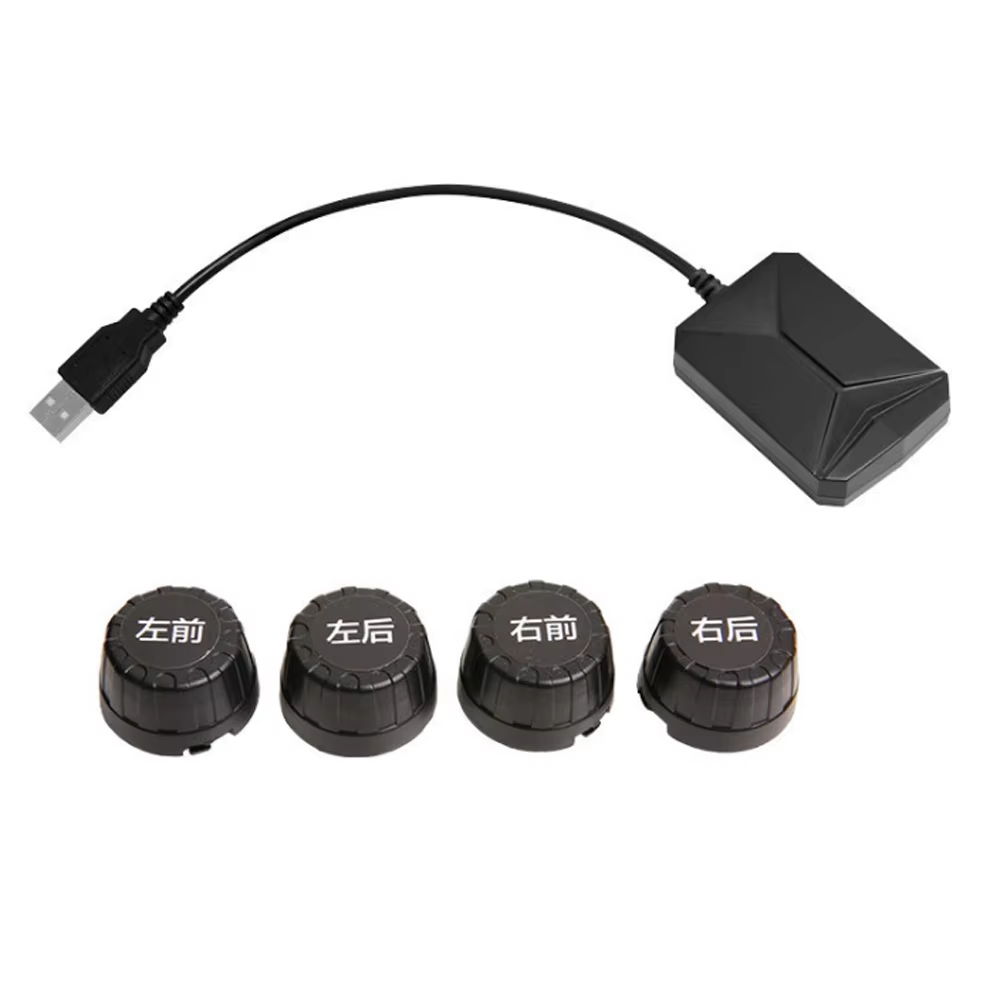
Real-time tire pressure & temperature monitoring through your Android car system.
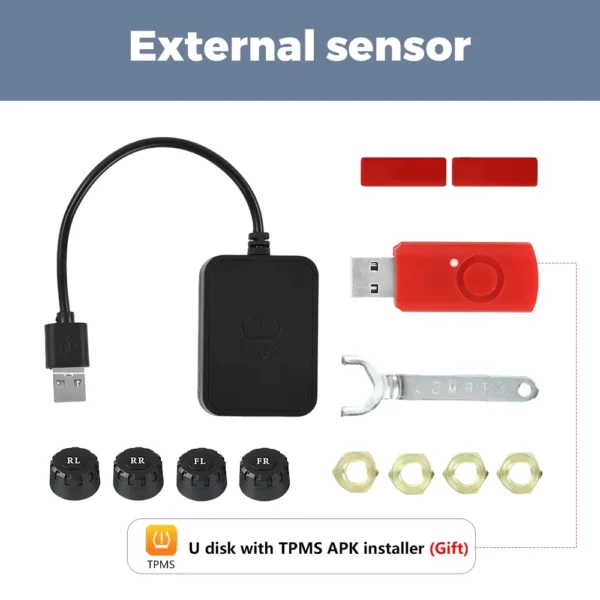
This USB TPMS system connects effortlessly to your Android car's DVD player or navigation unit through a USB receiver. A custom Android app on the included U disk installs quickly, allowing real-time tire data monitoring directly on your multimedia screen.
Monitor tire pressure and temperature continuously for all four tires. Instant audible alarms notify you of any abnormal pressure or temperature conditions, helping prevent tire bursts and extending tire lifespan.
Utilizing stable 433MHz frequency technology ensures reliable communication between sensors and receiver. The sensors feature durable CR2050 batteries and work accurately across a wide pressure and temperature range.
Simply plug the USB receiver into your car’s Android system, copy and install the provided app, then pair the sensors. No complicated wiring is required, making setup quick and user-friendly.
It connects via a USB receiver plugged into the Android-based DVD or navigation system and uses a dedicated app installed from the included U disk.
It shows real-time pressure and temperature data for all four tires simultaneously.
It issues audible alarms for high/low tire pressure and high temperature abnormalities to warn drivers promptly.
The sensors and receiver communicate using 433MHz frequency for stable and accurate data transmission.
The sensors measure tire pressure from 0 to 116 psi (0 to 8 bar).
They monitor temperatures from -40°C to 125°C, suitable for varied driving conditions.
Sensors use an internal CR2050 3V 330mAh button cell battery for long-lasting operation.
No, the USB receiver plugs into the vehicle system, and clear instructions facilitate easy setup without complex wiring.
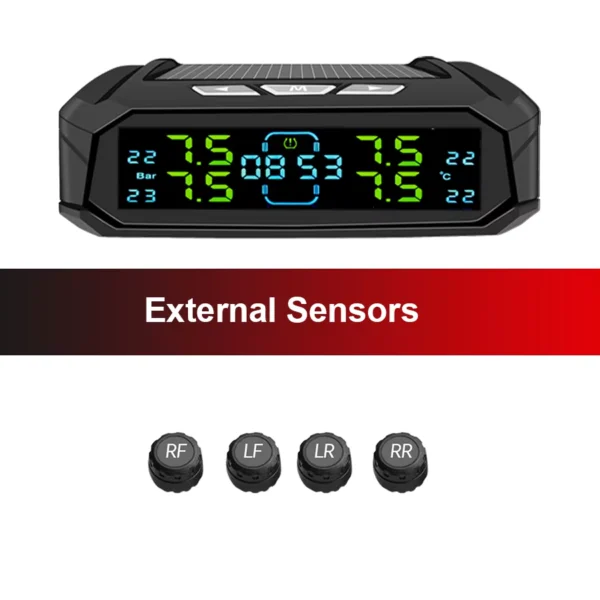
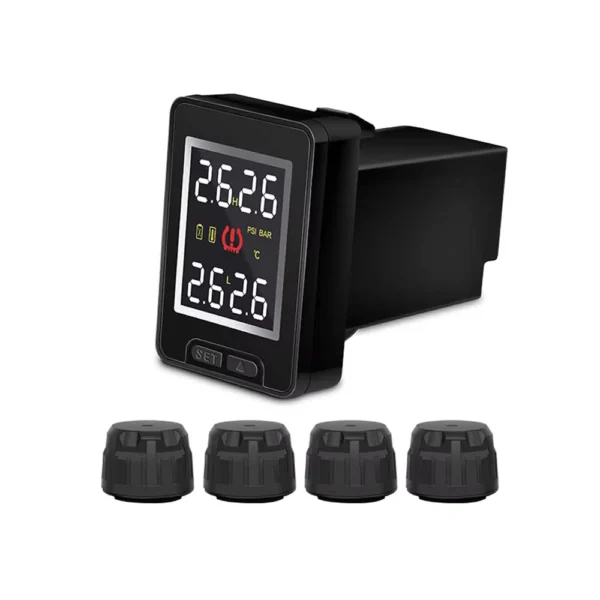
Yes, there are options for either internal or external sensors depending on vehicle and user preference.
The USB receiver operates at DC 5V with current below 15mA, suitable for continuous connection to the car's multimedia system.
what I ordered
Good product thanks
Thank you, well received, excellent seller.
It works, time will tell how long the batteries last.