
Works but did not manage to make it work under linux with usb 3, only usb 2. i cant say if the issue is the device or what i'm using it with.
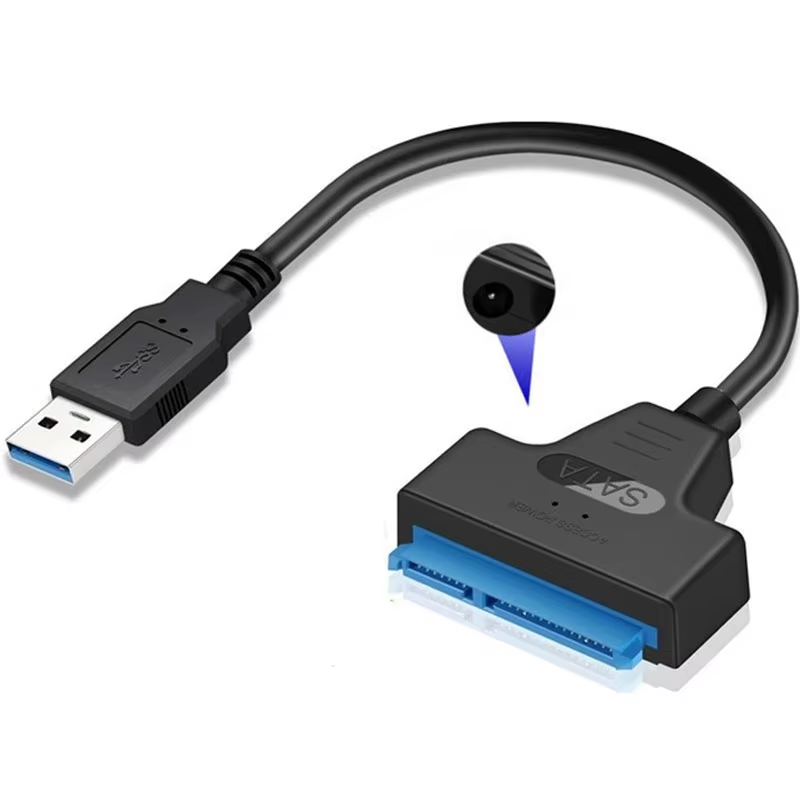
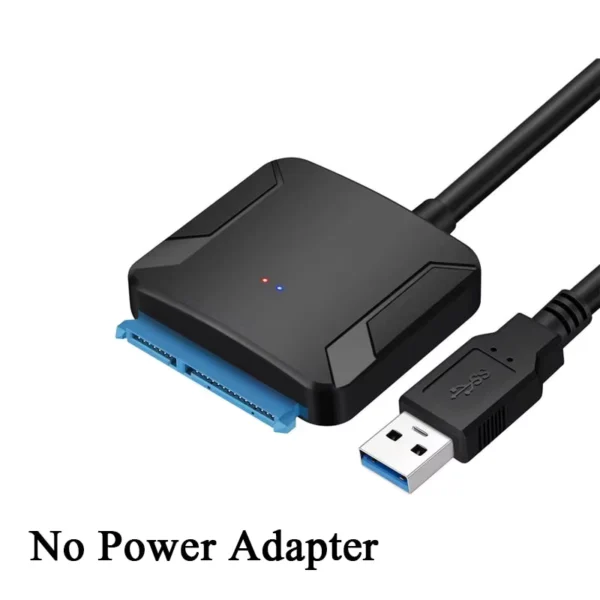
USB 3.0 to SATA adapter cable supports 2.5" and 3.5" hard drives and SSDs. Compatible with Windows, Mac, Linux, game consoles, and more.
Easily connect your 2.5" or 3.5" SATA SSD or HDD to any computer or device featuring a USB port. This adapter supports multiple operating systems, including Windows, Mac OS, Linux, and Chrome OS, plus game consoles and devices like Raspberry Pi and TVs.
Utilize USB 3.0 bandwidth for rapid data transfer rates to quickly access, backup, or recover data from your drives. Backward compatibility ensures it works efficiently with USB 2.0 and 1.1 ports too.
2.5" drives draw power directly from the USB port requiring no extra power source. 3.5" drives require a dedicated 12V 2A power adapter to function correctly, ensuring stable operation without risks to your hardware.
When used with devices and hard drives that support UASP, this adapter can boost data throughput speeds by up to 20%, optimizing performance during file transfers and backup operations.
New hard drives should be partitioned before use. Older drives may need data backup and repartitioning to function properly with this adapter.
Compatible across many device types including gaming consoles (PS4, Xbox One), media players, routers, and single-board computers for flexible usage scenarios.
It supports Windows 10/8.1/8/7/XP/Vista, Mac OS, Linux, and Chrome OS.
Yes, it is compatible with PS4, PS4 Pro, PS3, Xbox One, Xbox 360, and similar devices.
A 12V 2A power adapter is only required when connecting 3.5-inch hard drives. 2.5-inch drives do not need extra power.
Yes, it is backward compatible with USB 2.0 and 1.1 interfaces.
When your device, hard drive, and system support UASP, the data transfer speed can increase by approximately 20%.
Yes, new hard drives should be partitioned before using them with this adapter.
Back up any data first, then try creating a new partition to resolve detection issues.
No assembly is required; it is ready to use out of the box.
Yes, it supports devices like Raspberry Pi and compatible televisions.
Yes, it can connect to both SATA solid state drives (SSD) and hard disk drives (HDD).
Works but did not manage to make it work under linux with usb 3, only usb 2. i cant say if the issue is the device or what i'm using it with.
It works, writes to and reads large PC disks; I will update the review if anything goes wrong.
excellent product
Excellent cable. Works perfectly with large hard drives! We recommend the product and the seller!
It arrived within the expected timeframe, the data reading was fast, and I was able to solve a small problem with a laptop hard drive that wasn't allowing the reading process to proceed. However, I haven't been able to test it on a PC hard drive yet.